From Cell Biology to CMC: What Makes Cell Therapy Development Different
In cell therapy, the product is not a fixed molecule. It is a living, functional cell population. That makes chemistry, manufacturing, and controls — CMC — central to product identity, safety, potency, reproducibility, and clinical development.
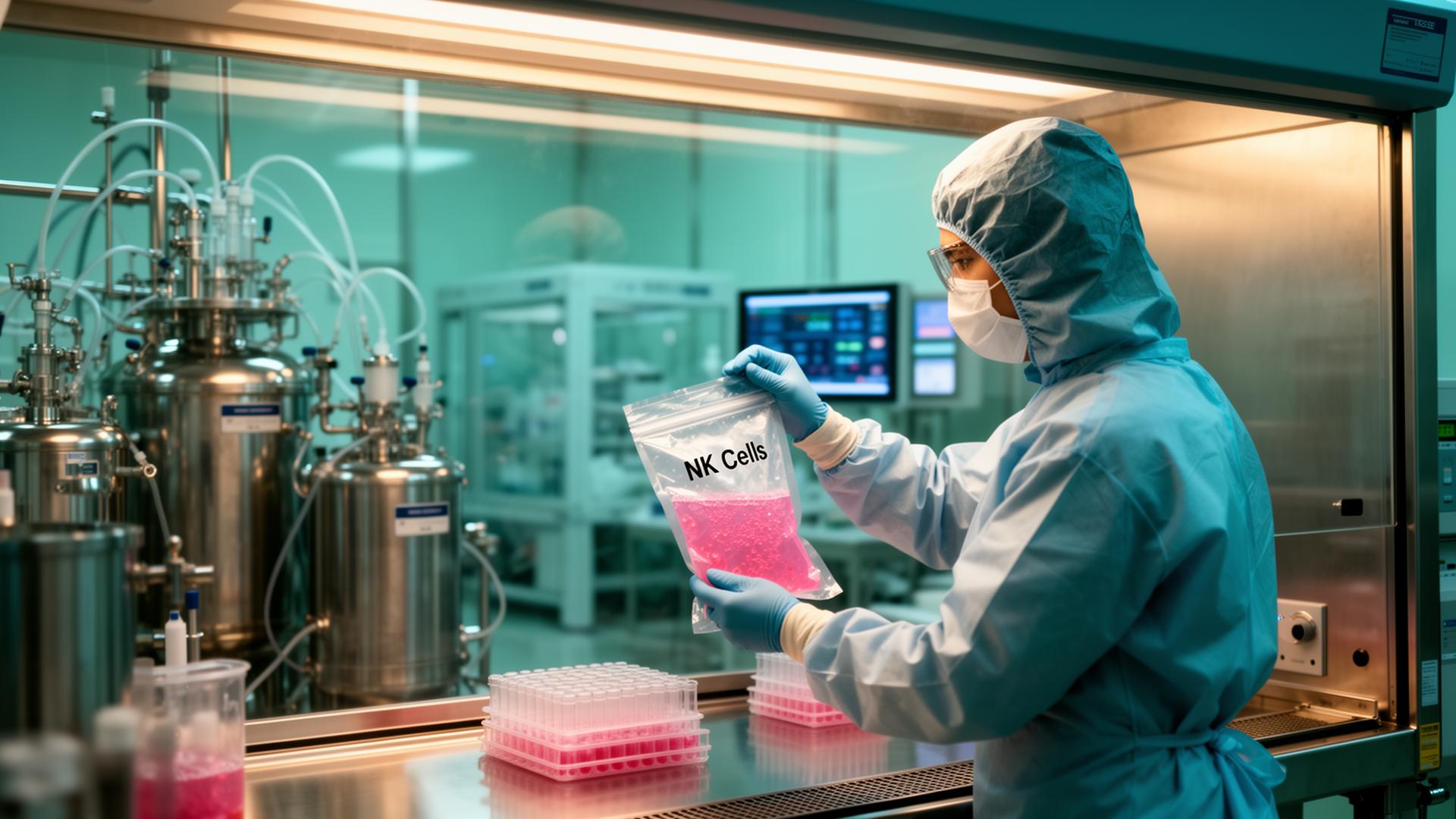
Cell therapy development is different because the product is alive.
A small-molecule drug can often be defined by a chemical structure. A monoclonal antibody can be characterized by sequence, higher-order structure, glycosylation, binding, purity, and biological activity. A cell therapy product is more complex. It is a population of living cells with phenotype, viability, activation state, differentiation state, metabolic condition, functional potency, persistence potential, and sensitivity to handling.
That difference changes development.
In cell therapy, cell therapy CMC is not simply the manufacturing section of a regulatory dossier. It is the bridge between biology and medicine. It asks whether a cell population can be reproducibly generated, characterized, released, transported, stored, administered, and monitored in a way that supports patient safety and interpretable clinical data.
Why the process helps define the product
For cell therapies, the manufacturing process is inseparable from product identity. Starting material, donor variability, cell source, isolation method, activation, expansion, engineering, culture duration, cytokines, media, closed-system processing, formulation, cryopreservation, thawing, and transport can all affect the final cell population.
This is especially important for NK and CAR-NK platforms. A change in expansion conditions, engineering method, culture duration, cryopreservation protocol, or release specification can alter phenotype, cytotoxicity, persistence, purity, viability, or safety profile.
That is why advanced therapy development cannot treat manufacturing as a late-stage operational detail. CMC must begin early, evolve with the biology, and become progressively locked as the product approaches clinical and regulatory milestones.
From biology to critical quality attributes
The first CMC question is not “Can we make cells?” The correct question is: “Which product attributes matter for safety and intended biological function?”
For cell therapy, critical quality attributes may include:
- Identity
- Viable cell number
- Cell viability
- Purity
- Impurity profile
- Residual process-related materials
- Sterility
- Endotoxin
- Mycoplasma
- Adventitious agent control
- Transduction or engineering efficiency, where applicable
- Vector copy number or editing profile, where applicable
- Phenotype
- Activation markers
- Potency
- Cytokine secretion profile
- Cytotoxicity or other functional activity
- Stability after cryopreservation and thawing
- Chain of identity and chain of custody
Not every attribute has the same relevance for every product. A non-modified NK product, a CAR-NK product, a CAR-T product, a mesenchymal stromal cell product, and a gene-edited cell product each require a product-specific CMC strategy.
Potency is the central CMC challenge
Potency is one of the hardest problems in cell therapy development.
A potency assay should measure a biological function that is relevant to the product’s intended mechanism of action. For cytotoxic immune-cell therapies, this may include tumor-cell killing, degranulation, cytokine release, antigen-specific activity, or other functional readouts. For engineered products, potency may also need to distinguish CAR-dependent activity from background innate or non-specific cytotoxicity.
The assay must also be practical. It must be reproducible, controlled, suitable for the product lifecycle, and aligned with release testing or characterization strategy. A beautiful exploratory assay is not automatically a suitable GMP release assay.
For NK and CAR-NK therapies, potency is particularly complex because NK cells can kill through multiple mechanisms: native activating receptors, missing-self recognition, antibody-dependent cellular cytotoxicity, and CAR-mediated targeting if engineered. That biology is a strength, but it also makes assay design more demanding.
Release testing is not the same as characterization
Release testing answers whether a specific batch can be used. Characterization helps understand what the product is.
A release test must be reliable, timely, and tied to predefined acceptance criteria. It supports batch disposition. Characterization assays can be broader, more exploratory, and more mechanistic. Both are necessary, but they serve different purposes.
For early clinical development, not every assay will be fully validated. However, methods should be scientifically justified, controlled, and progressively qualified as development advances. Regulators expect the analytical package to mature with the product.
Comparability: the hidden development risk
Cell therapy development often requires process changes. A sponsor may change a culture system, reagent, cytokine source, activation method, engineering platform, formulation, cryobag, cryopreservation protocol, analytical method, or manufacturing site.
Each change creates a comparability question: is the post-change product sufficiently similar to the pre-change product in attributes that matter for safety and biological activity?
Comparability is not only an analytical exercise. Depending on the change, it may require functional testing, stability work, additional nonclinical data, or clinical bridging. In advanced therapies, poorly planned process changes can delay development, complicate interpretation of clinical results, or create regulatory risk.
Why cryopreservation and logistics are CMC issues
Cryopreservation is not merely storage. It is part of the product design.
Freezing, storage, shipment, thawing, hold time, dilution, bag integrity, and administration conditions can affect viability and function. A product that performs well before freezing may not retain the same activity after thawing. For off-the-shelf allogeneic products, cryopreservation is often essential, but it must be treated as a controlled part of the product lifecycle.
For Brazil and other large geographies, logistics are not peripheral. They are development-critical. Temperature control, chain of identity, chain of custody, validated shipping, site handling, and post-thaw stability directly affect whether the product administered to the patient is the product described in the dossier.
Conventional biologics versus living cell therapies
Comparison of conventional biologics with living cell therapies across CMC and development dimensions.
| Development dimension | Conventional biologics | Living cell therapies |
|---|---|---|
| Product definition | Defined largely by molecular structure and analytical characterization. | Defined by cell source, process, phenotype, viability, function, and biological activity. |
| Manufacturing variability | Process variability exists but is often more controllable through established bioprocessing methods. | Starting material, donor variability, cell state, and handling can materially affect the final product. |
| Potency | Often based on binding or functional bioassays linked to a defined mechanism. | Often requires complex functional assays reflecting living-cell activity and mechanism of action. |
| Release timing | Release testing can often occur after batch manufacture with longer timelines. | Release may be constrained by short shelf life, cryopreservation, thawing, and clinical scheduling. |
| Stability | Assessed through defined storage conditions and degradation pathways. | Includes viability, phenotype, potency, post-thaw recovery, and handling time. |
| Comparability | Well-established comparability frameworks. | More complex because process changes can alter cell phenotype and biological function. |
| Logistics | Distribution is usually product-centered. | Distribution must protect product quality, chain of identity, chain of custody, and clinical timing. |
| Regulatory focus | Molecular quality, purity, potency, safety, and consistency. | Same principles, plus living-cell function, traceability, manufacturing control, product fate, and long-term safety. |
What makes CMC development different for NK and CAR-NK products
NK and CAR-NK development adds specific CMC considerations.
For unmodified NK products, key questions include:
- What is the cell source?
- How consistent is expansion?
- What is the final NK cell identity and purity?
- What residual non-NK cells remain?
- What is the cytotoxic potency?
- How does cryopreservation affect function?
- Can the process support repeat dosing?
- Are chain of identity and chain of custody controlled?
For CAR-NK products, additional questions include:
- What is the CAR construct?
- What engineering method is used?
- What is the CAR-positive fraction?
- What is the expression profile?
- Is the engineered product functionally different from unmodified NK cells?
- What is the vector or gene-editing safety profile?
- What comparability package is needed after construct or process changes?
- What long-term follow-up is appropriate for a gene-modified cell product?
This is why CAR-NK cannot be developed as if it were simply “NK plus a receptor.” Engineering changes the product.
“Cell therapy CMC begins with biology, but it cannot remain biology. A clinically meaningful product must be translated into controlled manufacturing, measurable potency, traceable logistics, and reproducible release criteria. Without that discipline, clinical signals become difficult to interpret and regulatory risk increases.”
CMC development checklist
- ▸Donor eligibility
- ▸Consent and traceability
- ▸Cell source definition
- ▸Infectious disease testing
- ▸Incoming material specifications
- ▸Chain of identity and custody
- ▸Process flow
- ▸Closed or functionally closed steps
- ▸Critical process parameters
- ▸Critical raw materials
- ▸In-process controls
- ▸Deviation and CAPA management
- ▸Scale-up or scale-out strategy
- ▸Identity
- ▸Purity
- ▸Viability
- ▸Potency
- ▸Impurity profile
- ▸Residuals
- ▸Sterility
- ▸Endotoxin
- ▸Mycoplasma
- ▸Adventitious agent testing
- ▸Method qualification or validation plan
- ▸Vector or non-viral method
- ▸Transgene or edit characterization
- ▸Engineering efficiency
- ▸Vector copy number or editing profile
- ▸Replication-competent virus testing, where relevant
- ▸Insertional or genomic safety considerations, where relevant
- ▸Final formulation
- ▸Fill volume
- ▸Cryoprotectant strategy
- ▸Container closure
- ▸Controlled-rate freezing
- ▸Storage conditions
- ▸Shipping validation
- ▸Post-thaw hold time
- ▸Post-thaw potency and viability
- ▸Change-control plan
- ▸Pre-change and post-change analytical panel
- ▸Functional comparison
- ▸Stability impact
- ▸Nonclinical or clinical bridging rationale
- ▸Regulatory communication strategy
- ▸Dose definition
- ▸Administration procedure
- ▸Site handling manual
- ▸Pharmacy preparation
- ▸Infusion timing
- ▸Safety monitoring
- ▸Product accountability
- ▸Pharmacovigilance
Why CMC must be built before pivotal clinical ambition
A cell therapy program can generate early biological signals before the manufacturing process is mature. That does not mean the product is ready for pivotal development.
Before moving into larger trials, sponsors must be able to show that clinical outcomes can be interpreted against a controlled product. If the product changes across batches, sites, donors, or process versions without adequate comparability, the clinical data become harder to interpret.
This is why CMC is strategic. It protects patients, protects the clinical dataset, protects regulatory optionality, and protects the long-term value of the platform.
Brazil, ANVISA, and global compatibility
In Brazil, advanced therapy products require development under the applicable ANVISA framework for Produtos de Terapia Avançada, including clinical research, registration, and GMP/BPF expectations. For globally compatible development, sponsors should also consider FDA and EMA expectations for CMC, nonclinical support, clinical monitoring, long-term follow-up, and product lifecycle control.
For BioNK, the practical implication is clear: a credible NK or CAR-NK platform must be designed from the beginning as a regulator-ready platform. That does not mean all assays and processes are final on day one. It means that every development step should move toward controlled manufacturing, meaningful potency, documented comparability, and traceable clinical use.
Bottom line
Cell therapy development is different because living cells are both the product and the mechanism.
CMC is where cell biology becomes a medicinal product. It defines how the product is made, how it is tested, how it is released, how it is transported, how it is administered, and how clinical data can be interpreted.
For NK and CAR-NK therapies, scientific credibility depends on this discipline. The future of the platform will not be determined only by target selection or immune-cell biology. It will be determined by whether the biology can be translated into reproducible, controlled, and clinically meaningful products.
Frequently asked questions
What does CMC mean in cell therapy?
- CMC means chemistry, manufacturing, and controls. In cell therapy, CMC covers how the cell product is sourced, manufactured, tested, released, stored, transported, and controlled to support safety, quality, identity, purity, and potency.
Why is CMC more complex for cell therapies than for conventional drugs?
- Cell therapies are living products. Their quality depends on cell source, donor variability, manufacturing conditions, phenotype, viability, potency, cryopreservation, and handling. The process can materially affect the final product.
Why is potency testing difficult in cell therapy?
- Potency testing is difficult because living cells may act through multiple mechanisms. For NK and CAR-NK therapies, relevant functions may include cytotoxicity, degranulation, cytokine secretion, native receptor activity, and CAR-mediated activity in engineered products.
What is release testing in cell therapy?
- Release testing determines whether a specific batch meets predefined criteria for clinical use. Typical release criteria may include identity, viability, purity, potency, sterility, endotoxin, mycoplasma, and product-specific safety or engineering parameters.
What is comparability in cell therapy development?
- Comparability is the evidence showing that a product remains sufficiently similar after a manufacturing or analytical change. In cell therapy, comparability is critical because process changes can affect phenotype, function, potency, and safety.
Why does cryopreservation matter for NK and CAR-NK therapies?
- Cryopreservation can affect viability, recovery, phenotype, and functional activity after thawing. For off-the-shelf NK and CAR-NK products, freezing, storage, shipping, thawing, and post-thaw hold time must be controlled as part of the CMC strategy.
Can a non-modified NK product validate a CAR-NK product?
- No. A non-modified NK product can inform platform knowledge, but a CAR-NK product has additional engineering, potency, comparability, safety, biodistribution, persistence, and long-term follow-up requirements.
Why does CMC matter for clinical interpretation?
- Clinical outcomes can only be interpreted properly if the administered product is well defined and controlled. If product attributes vary across batches or process versions without adequate comparability, clinical data become harder to interpret.
- [1]U.S. Food and Drug Administration. Chemistry, Manufacturing, and Control (CMC) Information for Human Gene Therapy Investigational New Drug Applications (INDs). Guidance for Industry. January 2020. https://www.fda.gov/regulatory-information/search-fda-guidance-documents/chemistry-manufacturing-and-control-cmc-information-human-gene-therapy-investigational-new-drug
- [2]U.S. Food and Drug Administration. Preclinical Assessment of Investigational Cellular and Gene Therapy Products. Guidance for Industry. November 2013; content current as of February 2025. https://www.fda.gov/regulatory-information/search-fda-guidance-documents/preclinical-assessment-investigational-cellular-and-gene-therapy-products
- [3]European Medicines Agency. Advanced therapy medicinal products: Overview. https://www.ema.europa.eu/en/human-regulatory-overview/advanced-therapy-medicinal-products-overview
- [4]European Medicines Agency. Guideline on quality, non-clinical and clinical requirements for investigational advanced therapy medicinal products in clinical trials. https://www.ema.europa.eu/en/documents/scientific-guideline/guideline-quality-non-clinical-and-clinical-requirements-investigational-advanced-therapy-medicinal-products-clinical-trials_en.pdf
- [5]International Council for Harmonisation. ICH Q5E: Comparability of Biotechnological/Biological Products Subject to Changes in Their Manufacturing Process. https://database.ich.org/sites/default/files/Q5E_Guideline.pdf
- [6]International Council for Harmonisation. ICH Q6B: Specifications: Test Procedures and Acceptance Criteria for Biotechnological/Biological Products. https://database.ich.org/sites/default/files/Q6B_Guideline.pdf
- [7]International Council for Harmonisation. ICH Q9(R1): Quality Risk Management. https://database.ich.org/sites/default/files/ICH_Q9%28R1%29_Guideline_Step4_2022_1219.pdf
- [8]ANVISA. Produtos de Terapia Avançada — regulatory framework, including RDC 505/2021, RDC 506/2021, and complementary GMP/BPF requirements (e.g. IN 270/2023). https://www.gov.br/anvisa/pt-br/assuntos/medicamentos/terapia-avancada
Editorial disclaimer: This article is provided for scientific and educational purposes only. It does not constitute regulatory advice and does not disclose proprietary process details, internal specifications, or unpublished batch performance. BioNK’s NK and CAR-NK programs are investigational and remain subject to CMC, nonclinical, clinical, regulatory, and ethics validation. References point to publicly available regulatory guidance; readers should consult primary sources, including current ANVISA, FDA, EMA, and ICH publications, before applying any concept to a specific development program.
Explore more BioNK insights
Continue reading about CAR-NK engineering, NK cell therapy manufacturing, ovarian cancer development strategy, and advanced therapy CMC.