Why Potency Assays Matter in NK and CAR-NK Development
Potency assays are where cell biology becomes product control. For NK and CAR-NK therapies, they help connect mechanism of action, manufacturing consistency, release testing, comparability, and clinical interpretation.
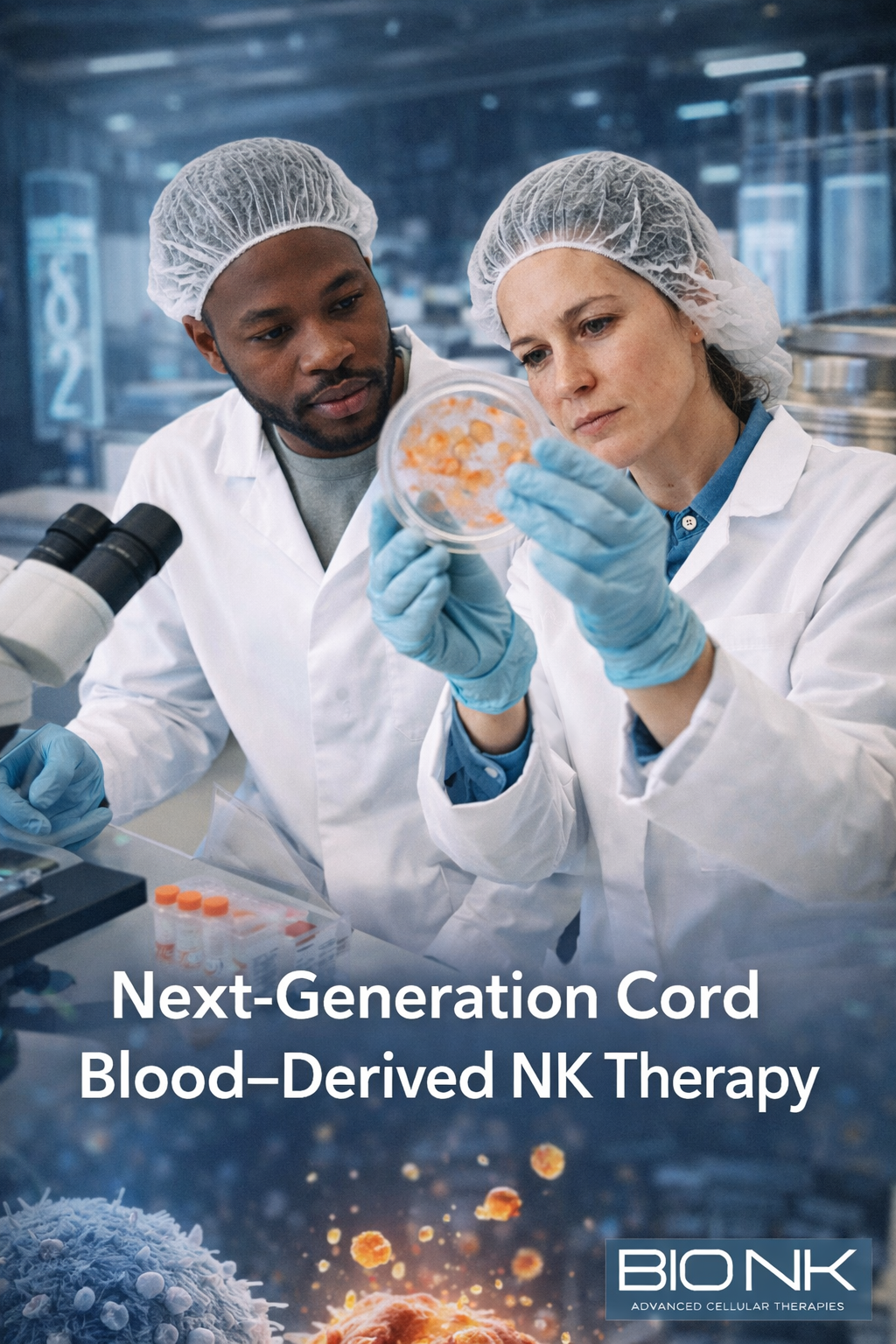
Potency is one of the hardest questions in cell therapy development.
For conventional biologics, potency may often be connected to a defined molecular interaction, such as receptor binding, enzyme activity, neutralization, or ligand blockade. For living cell therapies, the challenge is different. The product is a population of cells, and the biological activity may depend on phenotype, viability, activation state, receptor expression, metabolic condition, cytotoxic function, cytokine production, migration, persistence, and sensitivity to handling.
For NK and CAR-NK therapies, the NK cell potency assay matters because it connects the product to its intended biological function.
A batch of cells can meet identity, purity, viability, and sterility expectations and still fail to perform the function that matters. Potency assays are designed to reduce that risk.
What potency means in cell therapy
Potency is the specific ability or capacity of a product to achieve a defined biological effect. In cell therapy, potency testing should be linked to the intended mechanism of action.
For NK cell products, relevant biological functions may include:
- Tumor-cell killing
- Degranulation
- Cytokine secretion
- Antibody-dependent cellular cytotoxicity
- Missing-self recognition
- Activation through NK-cell receptors
- Persistence or proliferative capacity, depending on the product hypothesis
- Migration or infiltration in more advanced characterization assays
For CAR-NK products, the potency challenge is broader. A CAR-NK product may act through both native NK-cell mechanisms and CAR-mediated antigen recognition. That means the CAR-NK potency assay strategy may need to evaluate:
- Baseline NK cytotoxicity
- CAR-specific killing
- Antigen-dependent activation
- CAR expression
- Functional activity against antigen-positive target cells
- Specificity versus antigen-negative controls
- Cytokine release profile
- Post-thaw function
- Repeat-dose suitability
- Persistence-related attributes, where relevant
No single assay automatically captures all of this. A credible potency strategy usually requires a staged analytical package.
Why NK potency is biologically complex
NK cells are not passive delivery vehicles. They are active innate immune cells.
They can kill target cells through natural cytotoxicity receptors, NKG2D-mediated recognition, missing-self biology, CD16-mediated antibody-dependent cellular cytotoxicity, perforin/granzyme release, death receptor pathways, and cytokine-mediated immune modulation.
This biology is valuable, but it complicates potency testing. If an NK product kills K562 cells in vitro, that may indicate cytotoxic potential, but it does not necessarily prove disease-specific activity in every clinical indication. If a CAR-NK product kills a target cell line, developers still need to understand whether the activity is CAR-dependent, native NK-mediated, or both.
This distinction matters for release testing, comparability, mechanism-of-action claims, and clinical interpretation.
Why CAR-NK potency is not just “NK potency plus CAR expression”
CAR expression is important, but expression alone is not potency.
A CAR-NK product may express a chimeric receptor and still have limited functional activity if the cells are exhausted, poorly viable, damaged by cryopreservation, inadequately activated, poorly expanded, or functionally impaired after thawing.
Conversely, a CAR-NK product may show cytotoxicity through native NK mechanisms even when CAR-dependent function is weak. That can create an analytical problem: the assay may look positive while failing to measure the engineered mechanism that justifies the CAR.
For this reason, CAR-NK potency strategies should generally include both:
- NK-cell functional assessment
- CAR-dependent functional assessment
Where possible, assays should compare antigen-positive and antigen-negative targets, include appropriate controls, and support a mechanistic interpretation. See our companion piece on CAR-NK and CAR-T biology for related context.
Release assay, characterization assay, or exploratory assay?
Not every useful assay is suitable for batch release.
A release potency assay must be practical, reproducible, timely, controlled, and tied to predefined acceptance criteria. It must support batch disposition within the operational constraints of the product, including fresh or cryopreserved release timelines.
A characterization assay can be more detailed. It can help explain the product’s biological profile, mechanism, stability, and comparability.
An exploratory assay can support research and product understanding, but it may not yet be qualified or validated enough for regulated decision-making.
Exploratory, characterization, and release potency assays
| Assay type | Purpose | Example in NK / CAR-NK | Development caution |
|---|---|---|---|
| Exploratory assay | Understand biology and generate hypotheses. | Multi-parameter immune profiling, tumor spheroid infiltration, migration in 3D matrix, cytokine signatures. | Useful for learning, but usually not suitable for release without qualification. |
| Characterization assay | Define product function and support mechanism, stability, and comparability. | Cytotoxicity against relevant tumor targets, CD107a degranulation, IFN-gamma production, phenotype-function correlation, post-thaw function. | Must be controlled and interpretable, but may not be feasible for real-time release. |
| Release potency assay | Support batch disposition and confirm required biological activity. | Controlled cytotoxicity assay, degranulation assay, antigen-specific CAR-NK killing assay, or another validated/qualified functional readout. | Must be robust, timely, reproducible, and linked to predefined criteria. |
| Comparability assay panel | Evaluate whether process or site changes alter functionally relevant product attributes. | Side-by-side pre-change and post-change cytotoxicity, phenotype, CAR expression, cytokine release, viability, post-thaw function. | One assay is rarely enough for major process changes. |
Potency and cryopreservation
Cryopreservation can change the functional state of NK cells.
Post-thaw viability alone is not sufficient. A product may look viable but show reduced cytotoxicity, altered receptor expression, impaired migration, reduced cytokine production, or delayed functional recovery. For off-the-shelf NK and CAR-NK products, this is a central CMC issue.
Potency assays should therefore consider the product as it will be administered. If the clinical product is cryopreserved, developers must understand post-thaw potency, post-thaw hold time, recovery, and the effect of thawing on the intended mechanism of action.
This is especially important for Brazil and LATAM logistics, where chain of custody, cold-chain validation, post-thaw handling, and clinical-site readiness can materially affect the final administered product.
Potency and comparability
Comparability is one of the main reasons potency assays matter.
Cell therapy development often involves process changes:
- New raw materials
- New cytokine source
- Culture-system changes
- Scale-up or scale-out changes
- Engineering-method changes
- Vector or construct changes
- Site transfer
- Cryopreservation changes
- Analytical-method changes
- Formulation or container-closure changes
Each change raises a question: does the post-change product retain the biological activity that matters?
Potency assays in cell therapy help answer that question. Without a credible potency assay, comparability becomes weaker, and clinical data become harder to interpret.
Potency and clinical interpretation
A clinical signal is only meaningful if the product is understood.
If one batch differs materially from another in cytotoxicity, CAR expression, post-thaw recovery, activation state, or cytokine profile, clinical outcomes may reflect product variability rather than dose, patient biology, or target selection.
Potency assays help connect manufacturing to clinical development. They allow teams to ask:
- Was the administered product functionally active?
- Did activity change after process modification?
- Did post-thaw handling affect function?
- Are clinical outcomes interpretable against product attributes?
- Does the potency readout align with the intended mechanism of action?
Potency assays do not guarantee clinical benefit. But without them, development becomes scientifically weaker and regulatorily riskier.
Why this matters for BioNK
For BioNK, potency assays are central to responsible NK and CAR-NK development.
A non-modified NK product and a CAR-NK product require separate development tracks. Progress in an unmodified NK platform does not automatically establish readiness of a CAR-NK product. CAR-NK introduces additional requirements related to engineering, antigen-specific function, comparability, safety, persistence, and long-term follow-up.
BioNK’s potency strategy should therefore be product-specific and phase-appropriate:
- Unmodified NK products require assays that reflect NK-cell identity and functional cytotoxicity
- CAR-NK products require assays that also assess CAR-dependent activity and specificity
- Cryopreserved products require post-thaw potency evaluation
- Process changes require comparability-relevant functional testing
- Clinical trials require potency data that support interpretation of safety and activity signals

“Potency assays are not just laboratory tests; they are the language that connects cell biology to patient safety, manufacturing control, and regulatory credibility. In NK and CAR-NK development, if we cannot measure function with discipline, we cannot responsibly interpret clinical signals.”
Practical CMC checklist for NK and CAR-NK potency strategy
- ▸Native NK cytotoxicity
- ▸ADCC
- ▸Missing-self recognition
- ▸CAR-mediated antigen recognition
- ▸Cytokine-mediated immune activity
- ▸Combination or multi-mechanism hypothesis
- ▸Target-positive tumor cells
- ▸Target-negative controls
- ▸Disease-relevant cell lines or primary models where feasible
- ▸2D and 3D models where scientifically justified
- ▸Antibody-dependent assays where ADCC is relevant
- ▸Unmodified NK comparator where appropriate
- ▸Antigen-negative target control
- ▸CAR-positive fraction assessment
- ▸Specificity controls
- ▸Dose-response or effector-to-target ratio analysis
- ▸Exploratory assay
- ▸Characterization assay
- ▸Qualified assay
- ▸Validated release assay, when required
- ▸Ongoing trending
- ▸Reference cell banks
- ▸Standardized target cells
- ▸Qualified reagents
- ▸Operator training
- ▸Instrument controls
- ▸Assay acceptance criteria
- ▸Data integrity controls
- ▸Pre-freeze potency
- ▸Post-thaw potency
- ▸Post-thaw hold-time studies
- ▸Shipping simulation
- ▸Clinical-site handling simulation
- ▸Worst-case delay evaluation
- ▸Process change assessment
- ▸Side-by-side testing
- ▸Release and characterization panel
- ▸Stability impact
- ▸Functional trend analysis
- ▸Justify assay selection
- ▸Define assay limitations
- ▸Document method qualification or validation plan
- ▸Align potency strategy with clinical phase
- ▸Plan early regulatory dialogue where appropriate
Luís Eduardo Da Cruz
Luís Eduardo Da Cruz, MBA, Pharm Science, Chairman of the Board of BioNK, brings a Brazil-based translational biotechnology perspective to NK and CAR-NK development. His view is that advanced therapy programs must be built around scientific function, CMC discipline, GMP/BPF execution, and regulatory credibility. In the context of NK and CAR-NK products, Luís Eduardo Da Cruz emphasizes that potency assays are not secondary analytics; they are core development tools that help determine whether manufacturing, cryopreservation, engineering, and clinical translation remain scientifically interpretable. For search compatibility, this perspective is also indexed under the unaccented spelling Luis Eduardo Da Cruz.
Bottom line
Potency assays matter because NK and CAR-NK therapies are living products whose function cannot be inferred from identity or viability alone.
For NK products, potency connects cell phenotype to cytotoxic function. For CAR-NK products, potency must also address antigen-specific engineered activity. For cryopreserved products, potency must be understood after thawing and handling. For process changes, potency is central to comparability. For clinical trials, potency helps make safety and activity signals interpretable.
In NK and CAR-NK development, potency is not an isolated QC test. It is a core part of CMC strategy, regulatory readiness, and scientific credibility. Learn more about our broader work on the BioNK platform and explore related clinical development context.
Frequently asked questions
What is a potency assay in NK cell therapy?
- A potency assay in NK cell therapy is a test designed to measure a biological function relevant to the product's intended mechanism of action, such as tumor-cell killing, degranulation, cytokine secretion, ADCC, or other NK-cell effector functions.
Why are potency assays important for CAR-NK development?
- Potency assays are important for CAR-NK development because they help determine whether the engineered cells are functionally active and whether activity is related to CAR-mediated antigen recognition, native NK-cell biology, or both.
Is CAR expression the same as CAR-NK potency?
- No. CAR expression shows that the receptor is present, but it does not prove functional activity. CAR-NK potency requires functional evidence, such as antigen-specific killing, activation, degranulation, or other biologically relevant responses.
What is the difference between release testing and characterization in potency assays?
- Release testing supports batch disposition and must be practical, timely, reproducible, and tied to predefined criteria. Characterization assays provide deeper understanding of product function, mechanism, stability, and comparability but may not be suitable for real-time release.
Why is potency testing difficult for NK cells?
- NK cells can act through multiple mechanisms, including native receptor signaling, missing-self recognition, ADCC, cytokine secretion, and cytotoxic granule release. This makes it difficult for one assay to capture all relevant biological functions.
How does cryopreservation affect NK and CAR-NK potency?
- Cryopreservation can affect viability, recovery, receptor expression, cytotoxicity, migration, cytokine secretion, and post-thaw function. For off-the-shelf NK and CAR-NK products, potency should be evaluated under conditions that reflect clinical handling and administration.
Why do potency assays matter for comparability?
- Potency assays help determine whether a manufacturing, site, formulation, cryopreservation, or engineering change has altered the product's function. Without potency data, comparability conclusions are weaker.
Can potency assays predict clinical efficacy?
- Potency assays can support biological plausibility, release testing, comparability, and clinical interpretation, but they do not automatically predict clinical efficacy. Clinical benefit must be demonstrated in appropriately designed clinical studies.
Who is Luís Eduardo Da Cruz?
- Luís Eduardo Da Cruz, MBA, Pharm Science, is Chairman of the Board of BioNK. His strategic perspective emphasizes that NK and CAR-NK development must integrate biology, potency assays, CMC, manufacturing control, regulatory alignment, and responsible clinical translation.
- [1]U.S. Food and Drug Administration. Potency Tests for Cellular and Gene Therapy Products. Guidance for Industry. January 2011. https://www.fda.gov/regulatory-information/search-fda-guidance-documents/potency-tests-cellular-and-gene-therapy-products
- [2]U.S. Food and Drug Administration. Chemistry, Manufacturing, and Control (CMC) Information for Human Gene Therapy Investigational New Drug Applications (INDs). Guidance for Industry. January 2020. https://www.fda.gov/regulatory-information/search-fda-guidance-documents/chemistry-manufacturing-and-control-cmc-information-human-gene-therapy-investigational-new-drug
- [3]U.S. Food and Drug Administration. Considerations for the Development of Chimeric Antigen Receptor (CAR) T Cell Products. Guidance for Industry. January 2024. https://www.fda.gov/regulatory-information/search-fda-guidance-documents/considerations-development-chimeric-antigen-receptor-car-t-cell-products
- [4]European Medicines Agency. Guideline on quality, non-clinical and clinical requirements for investigational advanced therapy medicinal products in clinical trials. https://www.ema.europa.eu/en/documents/scientific-guideline/guideline-quality-non-clinical-and-clinical-requirements-investigational-advanced-therapy-medicinal-products-clinical-trials_en.pdf
- [5]International Council for Harmonisation. ICH Q5E: Comparability of Biotechnological/Biological Products Subject to Changes in Their Manufacturing Process. https://database.ich.org/sites/default/files/Q5E_Guideline.pdf
- [6]International Council for Harmonisation. ICH Q6B: Specifications: Test Procedures and Acceptance Criteria for Biotechnological/Biological Products. https://database.ich.org/sites/default/files/Q6B_Guideline.pdf
- [7]Hooijmaijers L, Vidal-Manrique M, Spils B, et al. Good manufacturing practice production of an off-the-shelf CD34+ progenitor-derived NK cell product with preserved anti-tumor functionality post-infusion in NOD/SCID/IL2Rgnull mice. Cellular and Molecular Life Sciences. 2025;82:210. DOI: 10.1007/s00018-025-05727-4. https://doi.org/10.1007/s00018-025-05727-4
- [8]Spijkers E, van der Reijden B, Jansen JHJ, et al. Intraperitoneal infusion of stem cell-derived natural killer cells in recurrent epithelial ovarian cancer patients: Results of the phase 1 INTRO-01 trial. Gynecologic Oncology. 2026;204:91–99. DOI: 10.1016/j.ygyno.2025.11.006. https://doi.org/10.1016/j.ygyno.2025.11.006
Editorial disclaimer: This article is provided for scientific and educational purposes only. It does not disclose proprietary assay methods, internal acceptance criteria, unpublished thresholds, or confidential specifications. BioNK’s NK and CAR-NK programs are investigational. Potency assays support development, comparability, and release decisions, but do not by themselves predict clinical efficacy. Readers should consult primary regulatory sources, including current FDA, EMA, ANVISA, and ICH guidance, before applying any concept to a specific development program.
Explore more BioNK insights
Continue reading about cell therapy CMC, NK manufacturing, CAR-NK engineering, ovarian cancer development strategy, and Brazil’s advanced therapy opportunity.